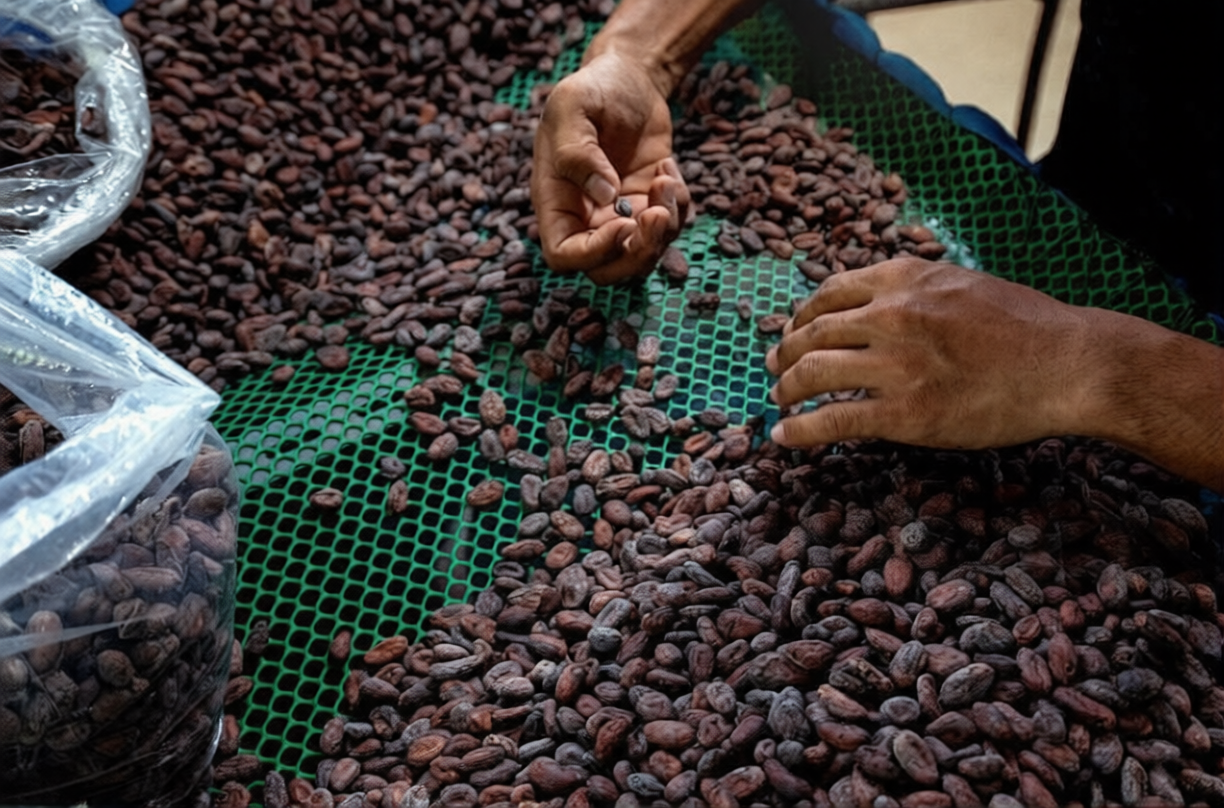
Understanding how cocoa quality is tested before export is essential for any buyer who wants the delivered container to match the approved sample. Quality control is not a single laboratory event. It is a chain of checks that begins with lot preparation and ends with shipment approval. Each step helps reduce the risk of mold, excess moisture, off-profile fermentation, contamination, or physical inconsistency.
For exporters, the testing process protects reputation and reduces claims. For buyers, it creates decision-quality information before freight costs and customs timelines lock the transaction in. The strongest cocoa programs combine physical inspection, representative sampling, and good recordkeeping so that the buyer can understand not only the lot result but also how that result was produced.
Key Buyer Takeaways
- Representative sampling is the foundation of credible cocoa quality testing.
- Moisture, bean cut, and defect screening are core checks before export approval.
- Bag condition and warehouse hygiene affect shipment quality as much as lab results.
- Buyers should request a pre-shipment quality summary, not just a verbal assurance.
1. Sampling comes before testing
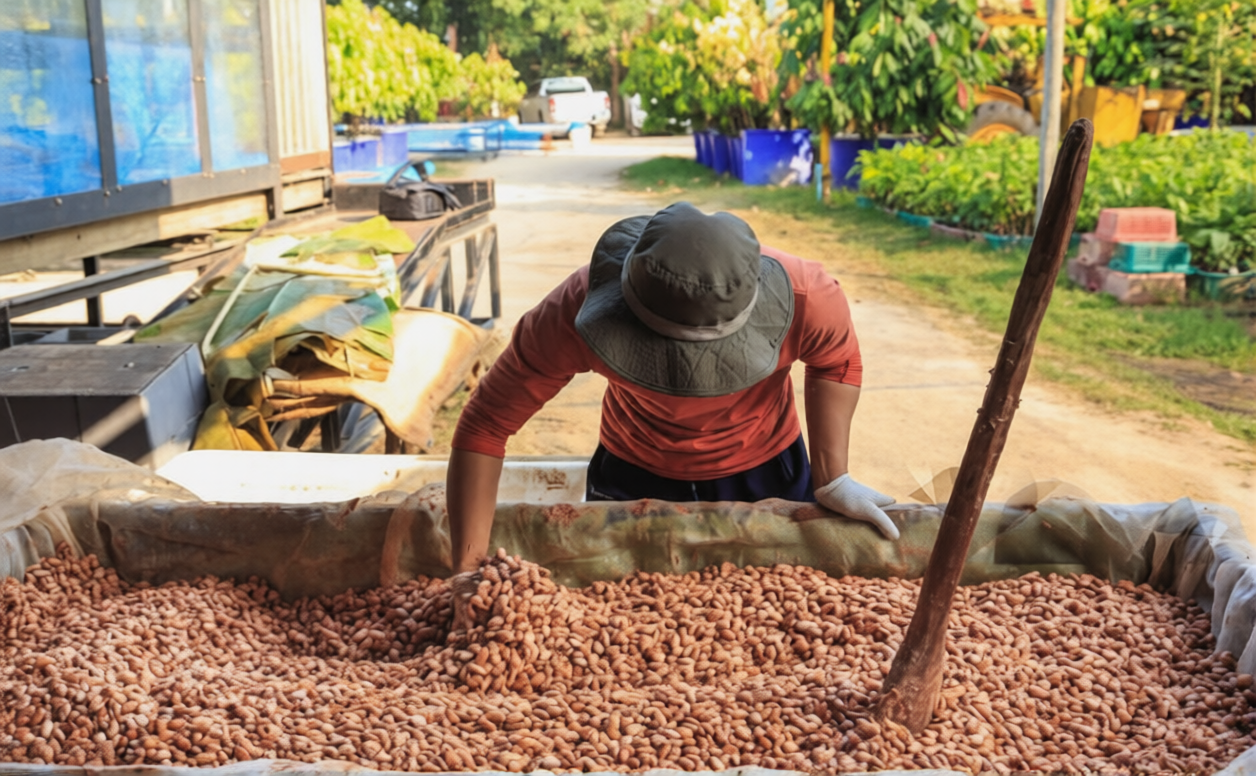
Every credible quality test depends on sampling discipline. If the sample is not representative, the result is not trustworthy no matter how sophisticated the test appears. Export lots should be sampled across the prepared volume, not from one convenient corner of the warehouse. That means taking beans from different bags and positions so the buyer gets a realistic picture of the lot instead of an unusually clean subset.
Sampling is especially important when cocoa has been aggregated from multiple sourcing points. In that case, even a visually uniform stack can hide meaningful internal variation. Exporters who take sampling seriously are usually better prepared to explain their lot-building process, and that is often a good sign for the rest of the shipment workflow as well.
2. Moisture analysis protects storage and shipment stability
Moisture is one of the first quality checks because it affects shelf stability, mold risk, and how the cocoa behaves during transit. A lot with excessive moisture may still look acceptable in the warehouse, but it becomes dangerous once it is bagged, loaded, and exposed to changes in ambient conditions. If moisture is too high, the cargo can deteriorate before it reaches the buyer.
That is why strong exporters verify moisture before shipment approval and not only at receiving. The result should be documented and reviewed alongside the condition of the bags and the storage environment. Moisture management is also where origin discipline and warehouse discipline meet. Even good cocoa can become a problem if it is stored poorly before loading.
3. Bean cut tests reveal fermentation quality
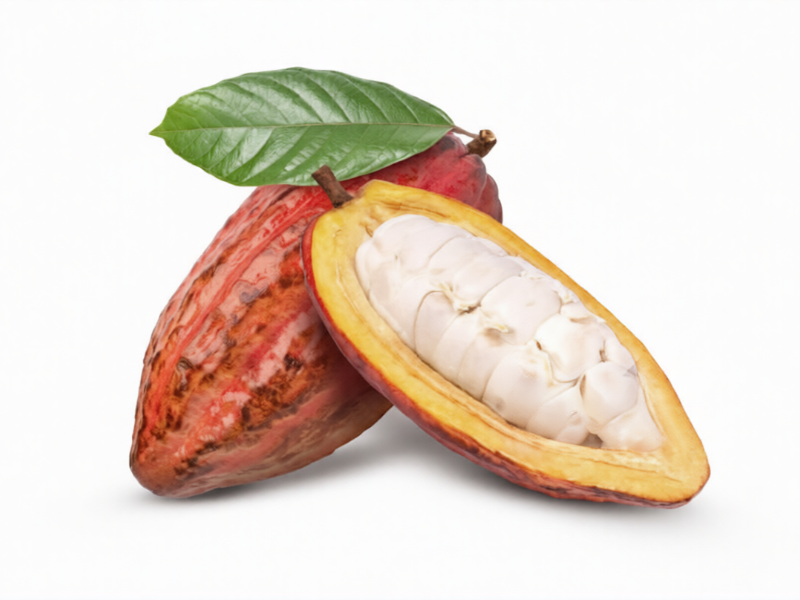
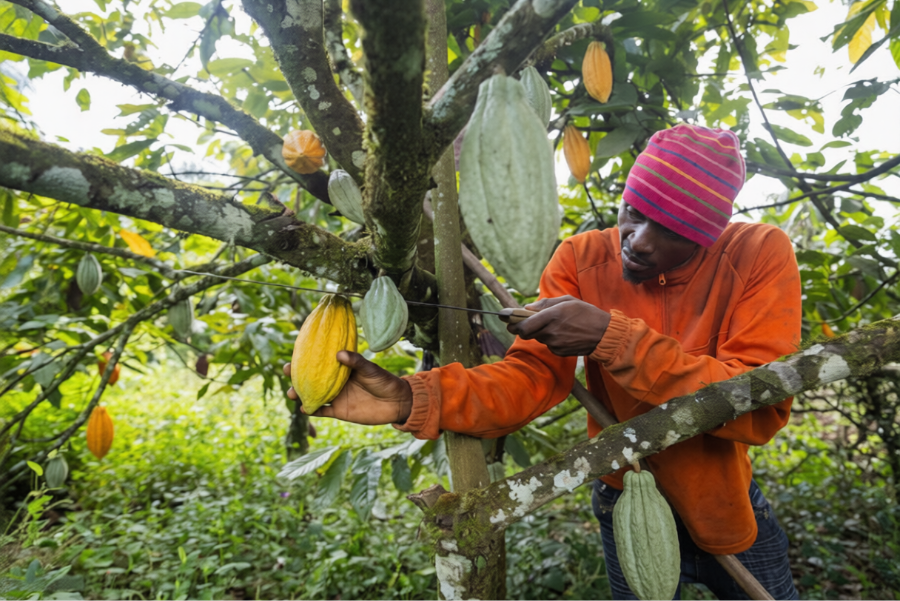
The bean cut test is central to cocoa quality evaluation because it shows what surface appearance cannot. By cutting a representative sample of beans, inspectors can assess fermentation quality, identify slaty beans, and estimate the share of purple or under-processed beans. These observations help buyers understand whether the lot is likely to deliver the flavor and processing profile they expect.
For export programs, cut tests are especially useful because they convert a subjective discussion about quality into something more measurable. A buyer does not need the exporter to claim the beans are good. The cut test lets the buyer see whether fermentation quality is sufficiently consistent across the sample. This is one reason why cut-test summaries are valuable additions to a pre-shipment approval pack.
4. Defect screening and physical inspection complete the picture
Quality testing also includes screening for moldy beans, insect damage, germinated beans, flat beans, foreign matter, and inconsistent bagging. A cocoa lot can pass moisture and still be commercially weak if the physical defect profile is too broad. Bag integrity matters too because torn or damp bags can compromise the cargo during handling and transport.
Physical inspection should extend beyond the beans themselves. Buyers should care about palletization approach, warehouse hygiene, odor contamination risk, and how the exporter segregates approved and non-approved lots. These are the operational controls that turn test results into shipment reliability. A strong exporter connects them to the wider handling process shown on the services page.
Why photos and videos help
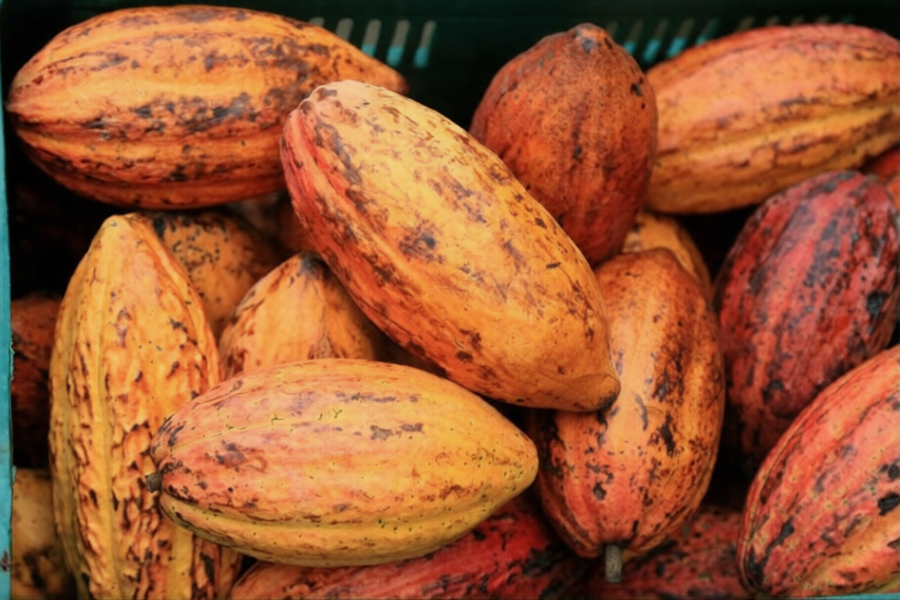
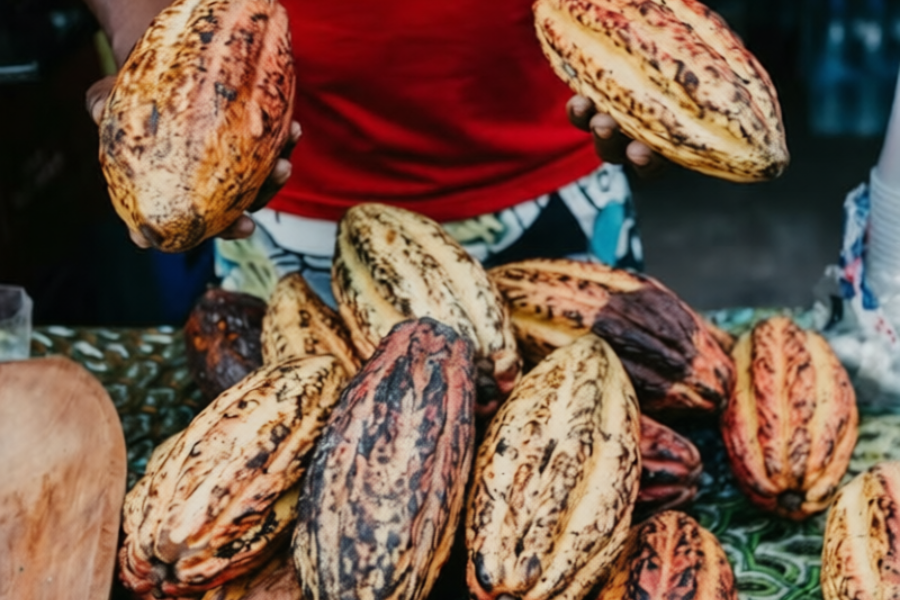
Visual evidence is not a substitute for testing, but it helps buyers interpret the results. Photos of the lot, bags, and inspection process create context and make it easier to resolve disagreements later.
5. Final shipment approval should combine data and traceability
Before loading, the buyer should ideally review quality results together with traceability and lot-identity information. This confirms that the tested cocoa is the cocoa that will be shipped. Without that link, there is always a risk that the inspected sample and the loaded cargo are not fully aligned.
A structured exporter should be able to show how the approved lot moved through storage and into the shipment process. That is where testing meets supply-chain control. If you want to understand how COCOABRIDGE manages lot identity alongside quality review, the traceability page provides the operating context. For a specific lot review, use the contact page to request a tailored quality and shipment discussion.
Need pre-shipment cocoa quality checks tied to export execution?
COCOABRIDGE helps buyers review lot condition, traceability, and shipping readiness before a container is released.
Frequently Asked Questions
Is moisture testing enough to approve cocoa for export?
No. Moisture is essential, but buyers should also review bean cut results, defect screening, physical condition, and lot identity before final approval.
What is the purpose of a bean cut test?
A bean cut test helps evaluate fermentation quality and reveals internal defects that cannot be seen from the surface of the beans.
Should buyers ask for pre-shipment photos?
Yes. Photos and videos of the lot, bags, and inspection process add valuable context and support document-based quality review.